
Article Series: The Future of Theatre in Boston
The Conjurors’ Club
Introducing the Immersive Theatrical Experience Boston Has Been Waiting For, and the History it was Built On
Article 6 of 7
Five articles. Five arguments. One question threading through all of them.
What is real — and what do we choose to believe?
LeRoy asked it with his catalog and his Club. Houdini asked it on every stage he stood on. Crandon asked it in every séance room she ever entered.
And now I’m asking it again.
In Boston. In 2026. With everything this series has been building toward.
Its name is The Conjurors’ Club.
What It Is
The Conjurors’ Club is a permanent, immersive theatrical experience coming to downtown Boston.
This is not a show. It is a place.
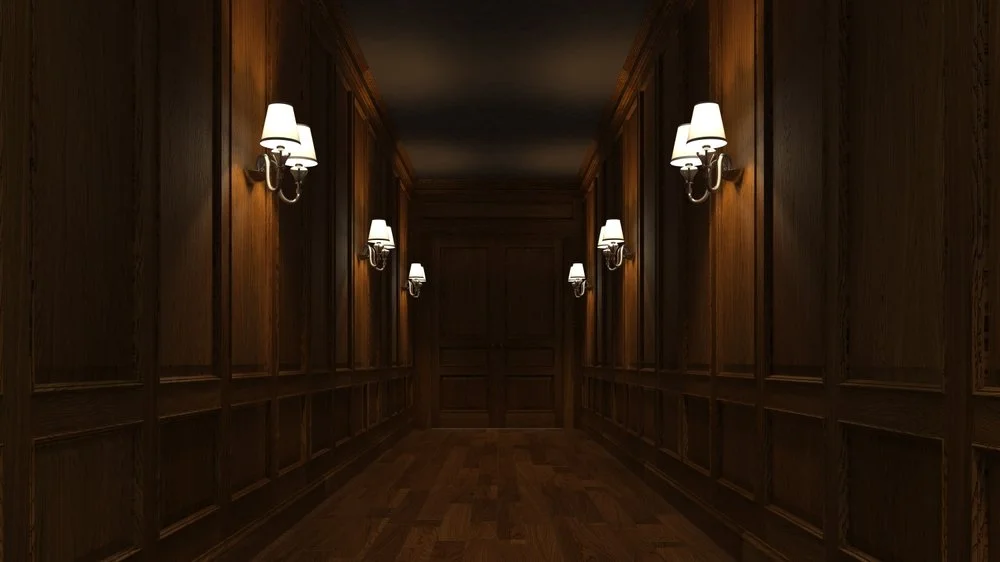
You will move through a world, not a venue. You will encounter members of the Club — people who have been here long before you arrived and will be here long after you leave. Some will guide you. Some will find you. Some you will find yourself, in rooms you weren’t sure you were supposed to enter.
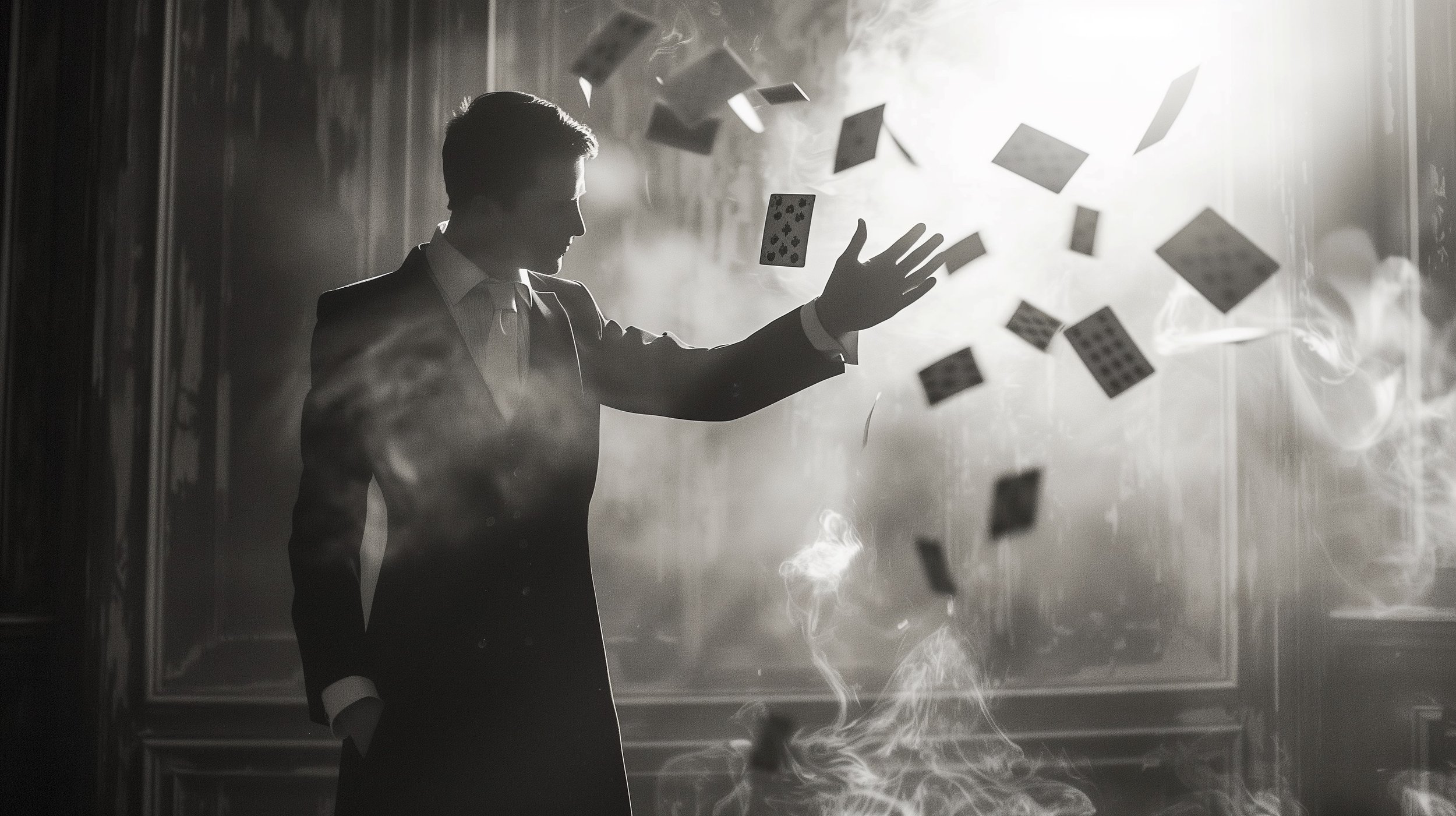
You will encounter magic. Close to you. Sometimes inches away. Sometimes across the room. Sometimes in ways that have nothing to do with anyone standing in front of you.
You will encounter a story being told. Part guided and part self-discovery, which parts of it you experience depends on where you go, who you speak to, what you notice, and whether you’re paying attention to the right things at the right moment.
You will not see everything in a single visit.
That is not a limitation. It is the design.
The evening runs two to two and a half hours. Food and beverage are part of the world. Capacity is intentionally limited — this is not an experience built for crowds. And the location is a secret, revealed only to those who acquire a ticket.
The journey to finding it is part of the evening.
What waits inside is something you will have to decide for yourself — what was real, what was illusion, and whether, in the end, the distinction matters.
Where It Comes From
The Conjurors’ Club is not a concept invented for the experience economy.
It is a name that already existed.
William Davis LeRoy — the man who built the Boston School of Magic at 103 Court Street in Scollay Square, who supplied Houdini’s escape acts, who recruited one in six members of the Society of American Magicians in its first fifteen years — founded The Conjurors’ Club — a fraternal society for amateur and professional magicians that the Boston Globe confirmed was still active in 1917, with LeRoy presiding as its President.
The Blanchard Building was demolished. Scollay Square was razed. The Palace Theatre — where Houdini performed steps from LeRoy’s door in October 1895 — was bulldozed in 1962 to build Government Center.
But some things cannot be razed.

The ground where the Palace Theatre and Boston School of Magic once stood, cleared in 1962. Some things, it seems, cannot be razed
That’s the story.
For over 135 years, a secret society of magicians has called Boston their hub for devising, perfecting, and sharing magic. In a hidden location created by LeRoy, an alliance of magicians continues to gather. You’ve probably passed it hundreds of times — never suspecting what’s been hiding in plain sight.
Now, for the first time, they are opening the doors.
The question the series has been asking — what is real, and what do we choose to believe — is not just the question Houdini and Crandon debated a century ago.
It’s the question guests will be living inside when they walk through the door.
Why Boston. Why Now.
This series began with a structural argument: Boston has the talent, the audience, and the demand — but not the commercial infrastructure to sustain them. The creative ecosystem is out of balance. The third leg of the tripod has been missing.
The Conjurors’ Club is the third leg.
It is the answer to the question Article 1 asked: what would it look like if we built the piece that’s been missing? Not a touring show. Not a nonprofit production. A permanent, commercially structured, locally rooted enterprise designed to sustain careers, not just productions.
It is built on the proof-of-concept Article 2 established: that Boston audiences will support long-running, repeatable, commercially viable entertainment when it’s offered to them. Shear Madness proved it. Blue Man Group proved it. The question was never whether the audience exists.
It is the immersive model Article 3 described: experience-driven, multi-environment, personally scaled, designed for repeat attendance. The kind of experience that generates its own word of mouth because no two guests have the same evening.
It is rooted in the history Article 4 uncovered: a chapter of Boston’s past so specific, so documentable, so extraordinary that no other in the world could claim it. The Conjurors’ Club was real. LeRoy was real. Houdini’s connection to 103 Court Street was real. That history isn’t decoration.
It is the foundation.
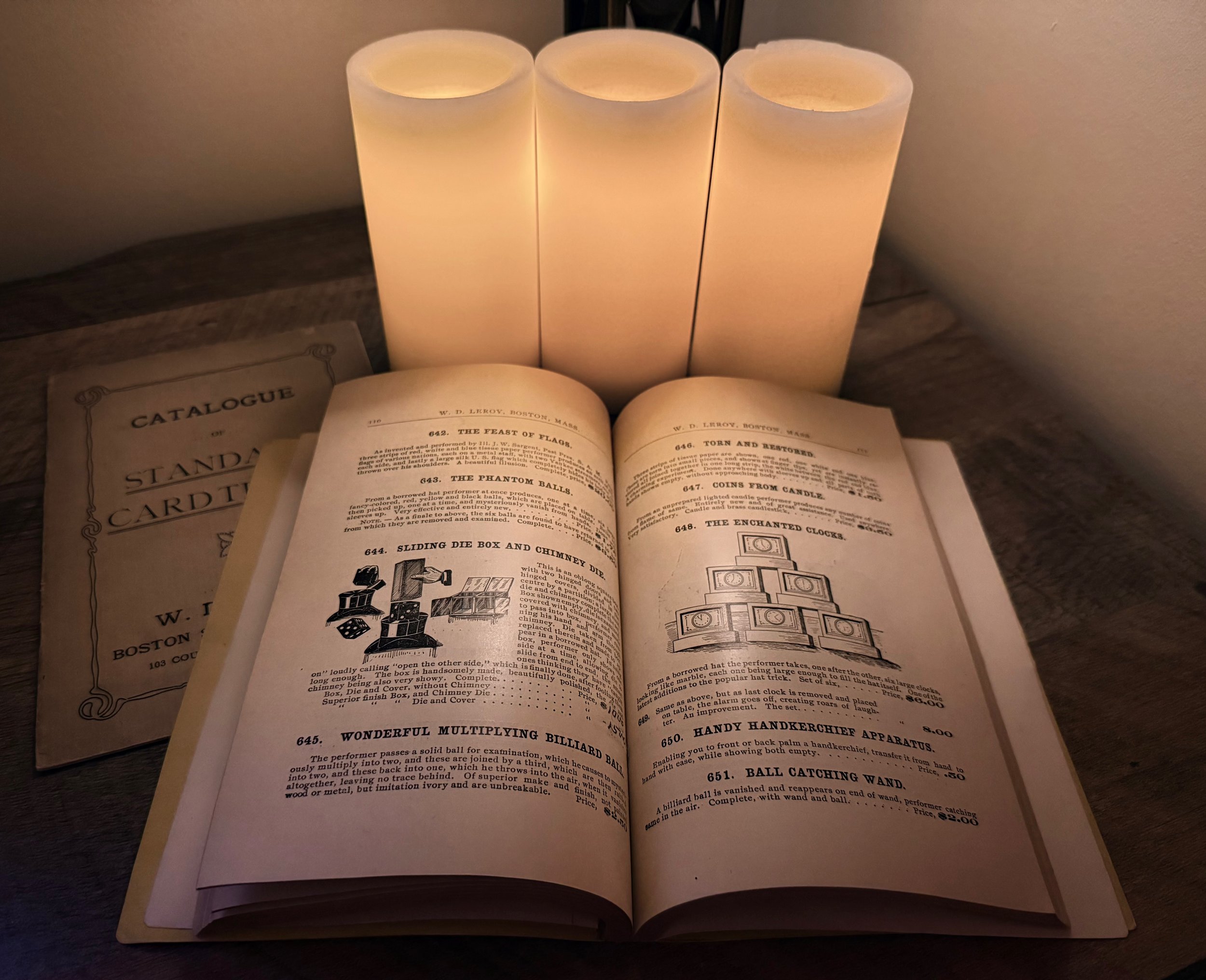
William Davis LeRoy’s “Mammoth Pictorial Catalogue”
And it is built with the sustainability architecture Article 5 argued for; rotating talent, evolving content, a genuine sense of place, an experience that begins before guests arrive, and audience design that creates loyalty across generations.
This is not one more show opening in Boston.
This is something being built from the ground up with the intention of lasting, not just for a season, but for the next generation of Boston artists looking for a reason to stay.
What It Creates
Beyond the experience itself, The Conjurors’ Club is designed to create something the creative economy of this city has been missing:
Sustainable, year-round employment for Boston’s creative workforce.
Performers in full-time, benefited positions with consistent schedules and career longevity
World-class magicians in rotating residencies - real, sustained engagements rather than one-night bookings
Technical, production, and operations staff in year-round roles
Front-of-house, food and beverage, and hospitality positions integrated into the experience
A commercial model that supports competitive wages, not the part-time, short-contract, benefits-free structure that forces talented people out of this city
This project has already been recognized by the City of Boston through the S.P.A.C.E. Grant program, awarded by Mayor Michelle Wu and the Office of Economic Opportunity and Development, a signal that the city sees what we’re building and understands its value to the creative economy.
But public support alone doesn’t open doors. It takes private investment, producing partners, and a community of people who believe that Boston’s creative future is worth building, not just celebrating.
Who This Is For
I want to speak directly to three groups of people who I hope have been reading this series.
To investors and producing partners:
The Conjurors’ Club is actively seeking investment. The model is commercial, the proof of concept is documented, the historical foundation is irreplaceable — and it is designed to turn a profit. Repeat attendance, premium pricing, rotating talent as a continuous news cycle, and a multi-revenue model built around ticket sales, food and beverage, merchandise, VIP experiences, and private events; these are the structural conditions for a return on investment. The target opening is fall 2026 to winter 2027, contingent on completing our capitalization. If you’ve read this series and recognized something you’ve been looking for, I’d like to have a conversation.
To Boston’s creative community — the artists, actors, technicians, designers, and administrators:
This is being built for you. Not as a one-time production opportunity, but as a permanent home — the kind of sustained, year-round, commercially structured creative employment that this city has asked for and too rarely offered. As we move toward our opening, we will be looking for the best Boston has to produce. Watch this space.
To the city of Boston — its policymakers, cultural institutions, neighborhood organizations, and economic development community:
This is what it looks like when commercial entertainment is built intentionally, rooted in the city’s own history, designed for its own audience, employing its own people, and contributing to its own cultural identity for decades rather than seasons. We are grateful for the city’s early support and look forward to deepening that partnership.
Can You Keep a Secret?
When William Davis LeRoy founded The Conjurors’ Club, the original members agreed to one thing above all else:
Never let the public know how it was done.
We’ve honored that principle in how we’ve built this experience. The secrets of The Conjurors’ Club, its location, its hidden rooms, the world that waits inside — are for guests to discover, not for articles to reveal.
What I can tell you is that the world is real. The history it’s built on is documented. The people building it are committed. And the question it will ask you, the same question LeRoy, Houdini, and Crandon spent their lives debating, has no easy answer.
Which is, of course, the point.
If you’re curious, and I hope you are, you can find us at theconjurorsclub.com.
There’s only one question we’ll ask when you get there.
What Comes Next
This series began with a question about Boston’s creative economy and ended with a name.
The Conjurors’ Club.
The final article in this series steps back from the specific and returns to the universal, because the argument this series has been making was never only about one venture in one city.
It has been about what cities lose when commercial creative infrastructure is allowed to erode, and what becomes possible when someone decides to build it back. Deliberately. Permanently. With a thirty-year horizon in mind.
Boston is the case study. The Conjurors’ Club is the answer.
The final article is a call to action — for investors, for the creative community, for the city, and for anyone who believes that what a place chooses to build says everything about what it values.
— Jonathan