Article Series: The Future of Theatre in Boston
Boston’s Moment
This is What it Looks Like When a City Decides to Build Something That Lasts
Article 7 of 7
What This Series Has Proven
Seven articles. One argument, built in layers.
Boston’s creative economy has a structural gap that talent and audience alone cannot fill. The workforce exists. The demand exists. What has been missing is the commercial infrastructure that allows success to compound rather than reset, the third leg of the tripod that keeps the entire ecosystem standing.
The proof of concept already exists and always has. Shear Madness ran at the Charles Playhouse for over forty years. Blue Man Group ran for thirty. Before them, the Colonial, the Shubert, and the Wilbur gave American theatre Oklahoma!, A Streetcar Named Desire, Candide, Camelot, The Sound of Music, and dozens of the works that defined an entire national art form. Richard Rodgers once swore he would never open so much as a can of sardines without bringing it to Boston first. Boston audiences have already told us everything we need to know. When given consistent, high-quality commercial entertainment, they show up. And they keep showing up.
The model that can complete this ecosystem is not theoretical. Immersive, experience-driven, permanently placed commercial theatre is the fastest-growing segment of live entertainment globally, and the producers who have built careers on it, from Sleep No More to Masquerade, have deep roots in this city.
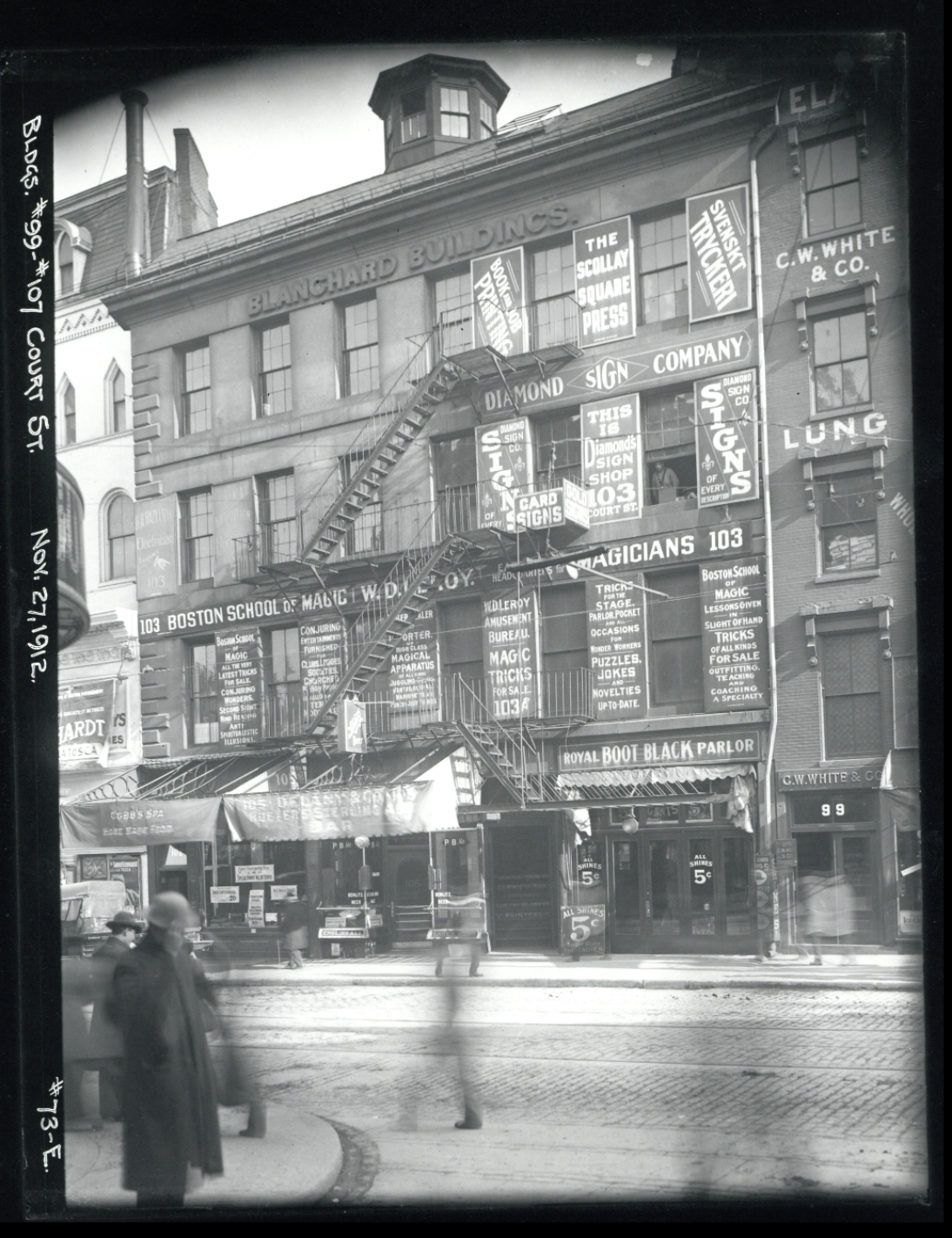
Boston’s history is not decoration. A man named William Davis LeRoy arrived in Boston in 1887, built the Boston School of Magic on Court Street, founded The Conjurors’ Club, recruited one in six members of the Society of American Magicians, supplied Harry Houdini’s escape acts, and created a fraternal society for performers built on the same principles that have animated every great creative community in American history. That history is the foundation — specific, documentable, and irreplaceable — that no other city in the world can claim.
And sustainability is not a result of success. It is a precondition. Built into every structural decision, from how talent rotates to how the experience begins before guests ever arrive. Longevity doesn’t happen to a great entertainment experience. It is built into it, deliberately, from the very first day.
Boston Is the Case Study
This series was always about more than one city.
The structural gap between creative talent and commercial infrastructure exists in Chicago and Philadelphia and Dallas and Seattle and every other American city that has a world-class creative workforce and an incomplete ecosystem to sustain it. The talent drain is not a Boston problem. It is an American problem. And Boston is simply the city where someone decided to name it — and do something about it.
That decision is not a coincidence.
Part of what has kept this gap from being addressed is a persistent assumption that commercial theatre at this level can only exist in New York. That assumption has cost cities like Boston decades of creative infrastructure they were fully capable of building, and fully capable of sustaining.
Massachusetts has a documented history of going first.
The American Revolution began here. The first public school in America opened here. The first public library. Universal healthcare, the model that preceded the national conversation, was pioneered here. Marriage equality became law here years before the rest of the country followed. MIT and Harvard have made this state the global capital of innovation in science, technology, medicine, and public policy for generations.
Massachusetts doesn’t wait for permission. It builds the proof of concept. It demonstrates that something is possible. And then the rest of the country follows.
The creative economy deserves the same.
What Boston builds now is a permanent, historically rooted, commercially structured immersive entertainment destination. Not just the answer to Boston’s structural gap, but the proof of concept for every city in America that has been asking the same question and waiting for someone to answer it first.
Boston has always been that city.
What It Takes to Build It
Building something like this doesn’t happen alone.
I’ve been fortunate to have collaborators alongside me from early on: people who have invested their talent, their creativity, and their belief in this vision when it was still taking shape. They’ve helped carve what The Conjurors’ Club is becoming, and whatever we build will carry their fingerprints as much as mine.
None of us took the easy road to get here. A few years ago I left a long career to take a risk on something new. Then the pandemic hit and wiped out entire industries overnight — mine included. Starting over, in a city I love, at a point in my career where creating my own opportunity made more sense than waiting for someone else to offer one.
I’ve been producing theatre since I was 18 years old. I know how to make something from nothing, how to respect people’s time and investment, and how to see the path from here to a working production — even when it’s longer and harder than expected.
But I’ve never been more certain that it’s worth it. Boston is the right city. The history is real. The audience is here. And the creative economy of this city, of any city serious about sustaining the talent it produces, needs exactly the kind of permanent, commercially structured, deeply rooted destination we’ve been describing across this entire series.
The Conjurors’ Club will speak for itself.
That’s what I’m counting on.
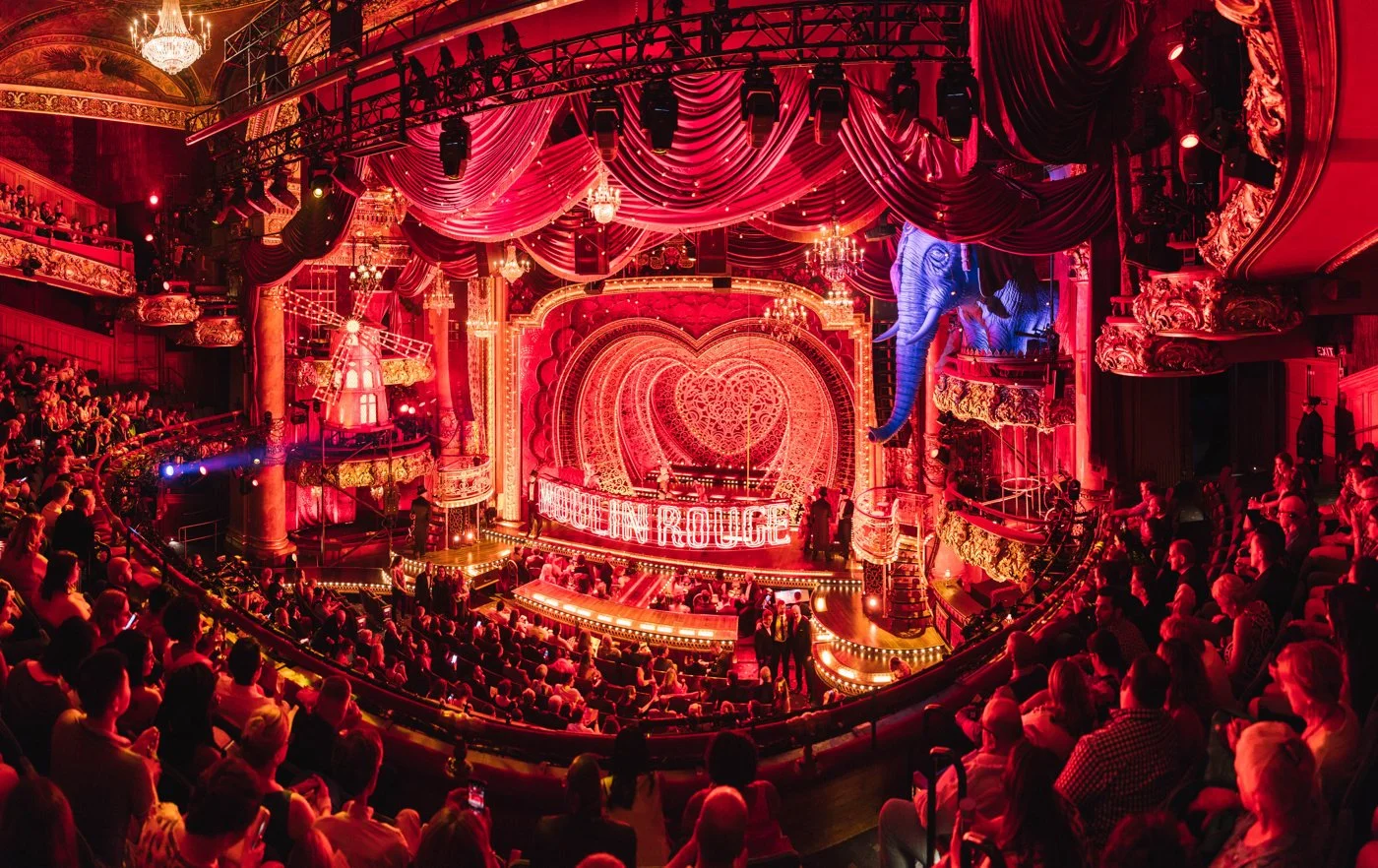
Moulin Rouge pre-Broadway tryout at the Emerson Colonial Theatre, 2018
The Call
Seven articles have built the case. Now I want to speak directly to three groups of people I hope have been reading.
To investors and producing partners:
The argument has been made. The history is real. The model is proven. The demand is documented. The Conjurors’ Club is actively seeking investment, with a target opening of fall 2026 to winter 2027, contingent on completing our capitalization. If you’ve read this series and recognized something you’ve been looking for, the window is now. Not because urgency is a sales tactic, but because the people who build lasting things are the ones who act before the moment passes.
To Boston’s creative community, its performers, designers, technicians, directors, and administrators:
This is being built for you. Not as a one-time production opportunity. As a permanent home: the kind of sustained, year-round, commercially structured creative employment that this city has asked for and too rarely provided. For the people who have left Boston because there wasn’t enough here to stay for: this is why some of them should come back. Watch this space.
To the city of Boston, its policymakers, its cultural institutions, its neighborhood organizations, and its civic leaders:
You have already recognized this work through the S.P.A.C.E. Grant program, and we are grateful for that signal of support. But grants open doors — they don’t build what’s behind them. The infrastructure conversation this series has been having is one that deserves a permanent place in how Boston thinks about its creative economy. Not as a cultural amenity. As economic infrastructure. The same way you think about transportation, education, and public health.
One final note.
The Conjurors’ Club is not the whole answer. It is one answer: one project, one destination, one permanent addition to the ecosystem this series has been arguing for. The work of completing Boston’s creative infrastructure will take multiple ventures, multiple investments, and multiple people willing to build rather than wait. I have plans beyond this one. Boston deserves more than one.
But you have to start somewhere. And this is where we start.
The Door Is Open
LeRoy built something in this city in 1887 and never left.
What he built outlasted the building it lived in. It outlasted the neighborhood that surrounded it. It outlasted every attempt the city made to erase it.
It has been hiding in plain sight ever since.
That’s what we’re building now.
Not a show. Not a pop-up. Not a touring production that arrives with fanfare and leaves without a trace.
Something that intends to still be here when the next generation of Boston artists is looking for a reason to stay.
Something built on the question that LeRoy, Houdini, and Crandon spent their lives asking — and never quite answered.
What is real — and what do we choose to believe?
Boston has always known how to answer that question.
It builds the thing.
Boston’s moment is now.
— Jonathan