
Article Series: The Future of Theatre in Boston
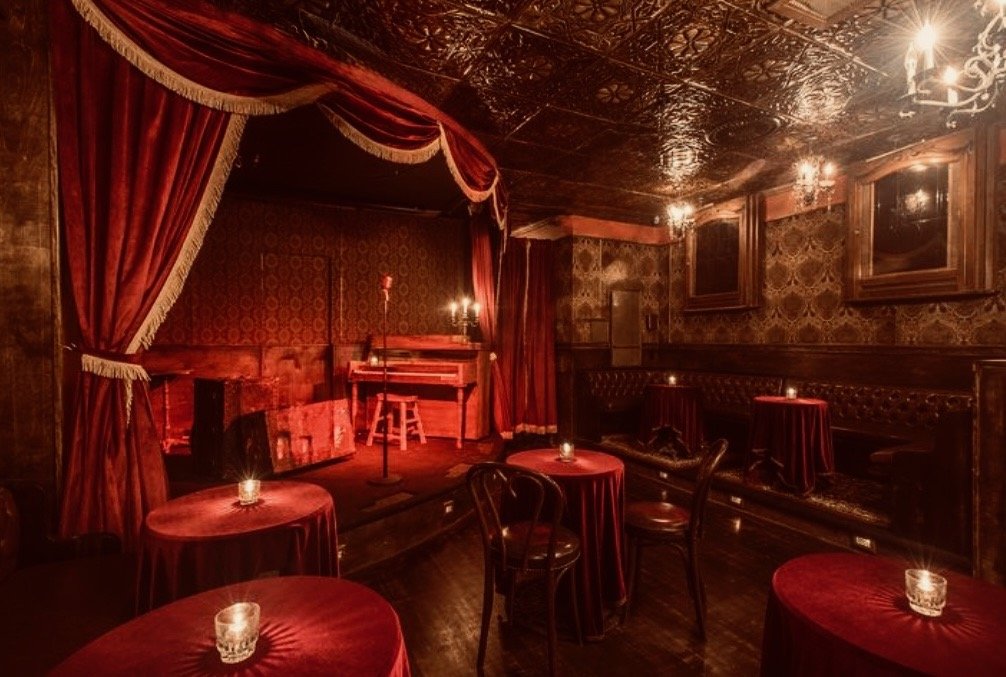
What Makes Something Worth Coming Back To?
The Difference Between a Show and a Destination,
and Why it Changes Everything
Article 5 of 7
The last article took us somewhere different.
Into history. Into a city’s forgotten relationship with magic, mystery, and the question of what’s real. Into three figures — LeRoy, Houdini, Crandon — who each spent their lives asking the same question in different ways and never quite got a final answer.
I hope it felt like a detour.
It wasn’t.
Because everything this series has been building toward — the structural argument, the commercial proof of concept, the immersive model, the historical identity — converges on a single question that I’ve been circling since Article 1:
What does it actually take to build something that lasts?
Not a show with a run. Not an experience with an end date. Not a production that arrives, performs, and leaves — taking its jobs, its energy, and its economic impact with it.
Something permanent. Something that becomes part of the fabric of a city. Something that people return to — not because they have to, but because they can’t imagine not.
The Question Nobody Asks Until It’s Too Late
Most conversations about live entertainment ask: will people come?
It’s the wrong question.
Or rather — it’s the right question, but it’s only half of it. The harder question — the one that separates a successful run from a sustainable institution — is:
Will they come back?
And the one after that:
Will they still be coming back in five years?
We already looked at the proof of concept in this series. Shear Madness ran at the Charles Playhouse for forty years — earning a place in the Guinness Book of World Records as the longest-running play in American theatre history. Blue Man Group ran in the same venue for thirty years before closing in 2025.
Neither of those productions ran for decades because they were the best shows in Boston.
They ran because they became destinations.
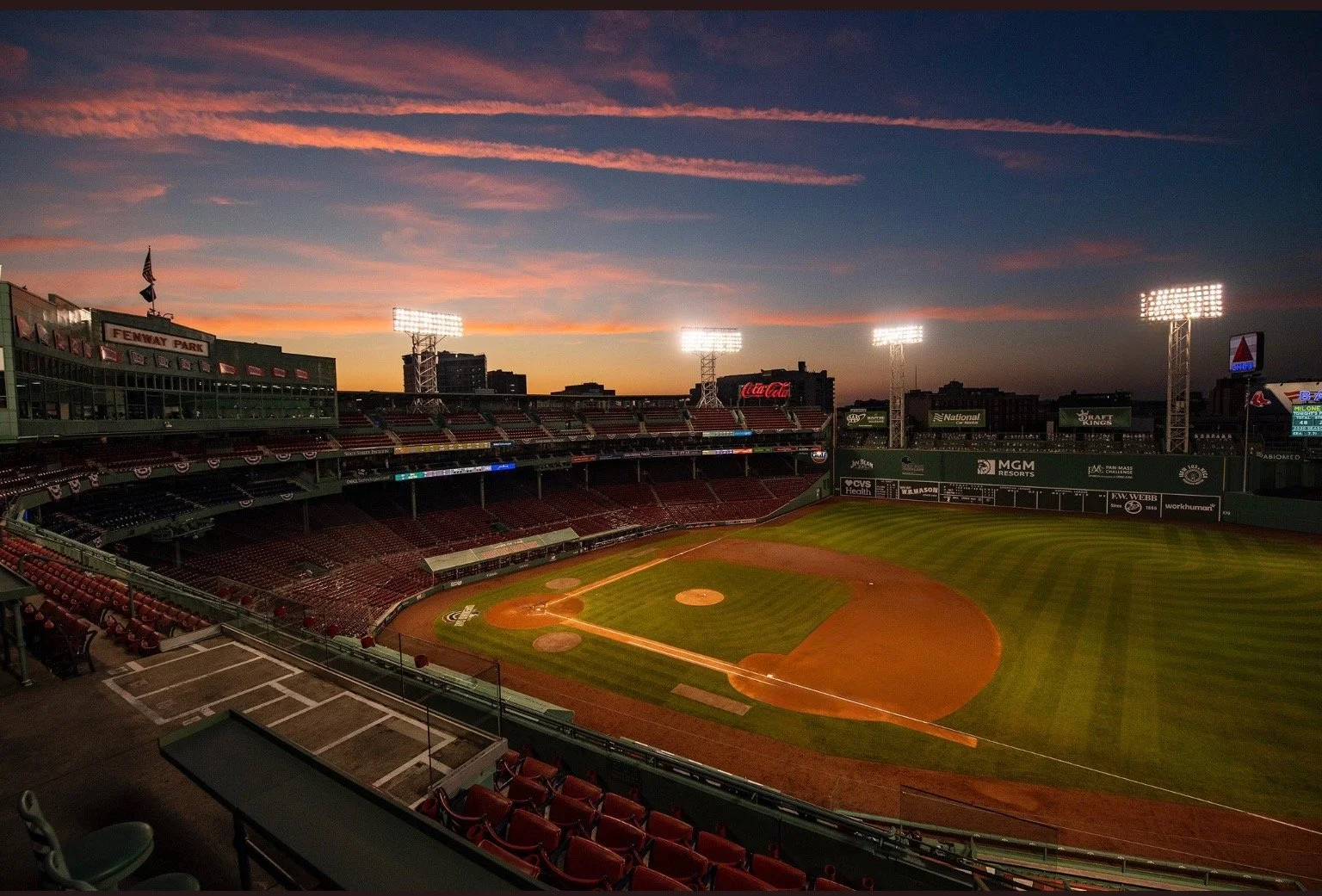
Fenway Park, Boston
Places people brought out-of-town visitors. Places people returned to for birthdays, anniversaries, first dates. Places that became woven into the personal histories of thousands of Boston residents who might never have thought of themselves as ‘theatre people.’
That distinction — between a show and a destination — is not a creative distinction. It’s a commercial one. And it’s the difference between a production that resets the ecosystem when it closes and one that leaves something permanently behind.
The Architecture of Return
So what structurally makes something worth returning to?
I’ve spent a significant amount of time thinking about this — not just as a creative question but as a business one. Because if you’re building something designed to last, every structural decision you make either serves that goal or undermines it.
Several elements, in my experience, are non-negotiable — and the most important ones are rarely the ones creative teams discuss first.
The first is evolving content.
The experience cannot be identical on every visit. Not just because audiences get bored — though they do — but because the possibility of something different is itself part of the value proposition. The experience that is the same every time trains its audience to come once and move on. The experience that is genuinely, structurally different on every visit trains its audience to come back, because they know they haven’t seen everything yet.
This is not just a creative philosophy. It’s an economic one. Rotating talent — guest artists who bring their own energy, their own approach, their own relationship with the material — keeps the experience alive in a way that a fixed cast performing a fixed show cannot sustain over years. It also solves a structural challenge that destroys most long-running productions: creative fatigue. When the experience is designed to evolve, there is no ceiling on how long it can run.
The second is the sense of belonging.
The most durable entertainment experiences don’t just create audiences. They create communities — people who feel they belong to something that others haven’t discovered yet. Not members in the formal, dues-paying sense, but something more organic and more powerful: the feeling of being someone who knows.
Boston understands this instinctively. This is a city that doesn’t just attend — it adopts. Red Sox fans don’t go to games. They go to Fenway. The distinction matters enormously. Fenway is not a venue. It’s an identity. And the question for anyone building a long-running entertainment experience in this city is whether they can earn that same quality of loyalty — not through marketing, but through the depth and specificity of what they’ve built.
The third is a genuine sense of place.
This is the one that touring productions, pop-up experiences, and streaming platforms can never replicate — and it’s the one that, in my view, matters most for long-term sustainability.
Place-based loyalty is the deepest kind. People don’t just return to experiences they enjoyed. They return to places that feel like they belong to them — places with a history, a character, a reason for existing that goes beyond the entertainment they provide. The restaurants and bars that last decades in Boston aren’t the ones with the best food. They’re the ones that feel irreplaceable. The ones where the walls have stories in them.
A touring show can’t have walls with stories in them.
A permanent, historically rooted, physically specific environment can.
A genuine sense of place also encompasses something less often discussed: audience design.
A thoughtfully built experience considers not just what happens inside its walls, but who is in the room when it happens. Offering evening performances curated for adult audiences alongside weekend matinees that welcome families and guests of all ages — with identical content in both — is a deliberate curatorial choice. What changes is the atmosphere. And atmosphere is itself part of the product.
An evening among adults creates a specific kind of camaraderie: unhurried, socially fluid, the kind of shared experience that deepens with a drink and a conversation between performances. A family matinee creates something entirely different — the particular magic of a child encountering genuine wonder for the first time, in a room full of people feeling exactly the same thing.
Both are worth designing for. Both create loyalty. And the child who discovers this world at eight may return at twenty-five for their first adult evening experience.
That seventeen-year arc of loyalty isn’t an accident.
It’s architecture.
The Experience Begins Before You Arrive
There’s one more dimension I’ve come to believe is equally essential — one that the most sophisticated experiences in the world are only beginning to explore.
The experience of anticipation.
Most entertainment experiences begin when you walk through the door. The ticket is a transaction. The confirmation email is logistics. The night itself is the product.
But what if the product began the moment you expressed curiosity?
What if signing up for information was itself the first act? What if a physical invitation arrived in your mailbox — a piece of ephemera, designed and weighted with intention — that contained not just a date and a time but clues? Instructions. A secret location. A phrase to memorize. A world to begin inhabiting before you’d set foot inside it.
Think about what that does to the experience of waiting.
It transforms it from passive anticipation into active participation. You’re not waiting for a show to start. You’re already inside the world — decoding it, preparing for it, talking about it with whoever you’re bringing with you. The conversation that happens between the invitation and the evening is part of the experience. The curiosity it generates — the questions it raises, the secrets it implies — is part of the product.
And here’s the commercial dimension that makes this more than a creative flourish:
Word of mouth generated before an experience even begins is the most powerful marketing that exists. It costs almost nothing to produce. It reaches people who would never respond to an advertisement. And it arrives pre-loaded with the most credible possible endorsement: the genuine excitement of someone who is about to do something they can’t fully explain yet.

A simple piece of ephemera can transform the experience of waiting into an experience of anticipation
What the Magic Castle Got Right — and What It Got Wrong
It’s impossible to talk about the architecture of a sustainable magic-based entertainment experience without acknowledging the Magic Castle in Los Angeles.
Founded in 1963, it is one of the most durable entertainment institutions in America. More than sixty years of continuous operation. A permanent home for world-class magic in a city that has seen countless entertainment venues come and go. By almost any measure, it is a success story.
And it contains a lesson that is at least as instructive as its success.
The Magic Castle requires membership — or a guest pass from a member — to enter. No walk-ins are permitted, even with a reservation. That exclusivity has been central to its identity and its mystique for six decades. And yet the model has shown its commercial limits: the Castle has had to create workarounds — most notably allowing guests of the adjacent Magic Castle Hotel to access the club — precisely because the membership requirement alone cannot sustain the revenue the venue needs. It has also been the primary limitation on its growth, its accessibility, and its ability to reach new audiences beyond a self-selecting inner circle.
The membership model creates belonging — but it creates it by exclusion. And exclusion, over time, calcifies. The audience stops growing. The community stops renewing itself. The experience becomes a legacy rather than a living thing.
There is a different model.
One that creates the same quality of belonging — the feeling of having been let inside something rare and specific and yours — without limiting access to those who already know someone. One that makes every guest feel like a member from the moment they first encounter the world, not from the moment they pay a membership fee.
The difference is not in the exclusivity of access.
It’s in the depth of the world you’re being given access to.
The Business Case for Depth
Let me make the commercial argument directly, because I think it’s often obscured by the creative conversation.
An experience with genuine depth — one that cannot be fully discovered in a single visit, that rewards return attendance with new revelations, that creates the feeling that there is always more to find — has structural commercial advantages that a single-visit experience fundamentally cannot match.
Repeat attendance multiplies revenue per customer without multiplying acquisition cost. In almost any business, the most expensive customer is a new one. An experience that generates four visits from the same person at the same ticket price has effectively quadrupled its revenue from that relationship while spending on acquisition only once.
Word of mouth from returning guests is categorically different from word of mouth from first-time visitors. A first-time visitor says ‘I went and it was great.’ A returning guest says ‘I’ve been three times and I’m still finding new things.’ That second sentence sells tickets in a way the first never will.
Rotating talent creates a continuous news cycle with no additional marketing spend. Each new guest artist is a reason to return, a reason to tell someone, a reason to follow what’s happening. In an era where content marketing is everything, an experience that generates its own evolving content — through the artists it hosts, the stories it accumulates, the secrets its returning guests discover — has a compounding advantage over static productions.
And depth creates resilience.
A show that can be fully consumed in one visit is vulnerable. A slower week, a bad review, a competing opening — any of these can tip a marginal production toward closure. An experience that guests are still discovering after multiple visits has a built-in audience that no single external factor can easily dislodge. They’re not coming because of a review. They’re coming because they know there’s something they haven’t found yet.
Sustainability Is a Design Choice
This is the thing I want to say as directly as I can, because I think it’s the thing most often treated as an afterthought in commercial entertainment:
Longevity doesn’t happen to an experience. It’s designed into it.
Every structural decision made in the development of an entertainment venture either serves the goal of permanence or undermines it. The choice of format. The choice of space. The choice of how talent rotates and how characters evolve. The choice of how deep the world goes and how many layers it has. The choice of when the experience begins — whether it starts at the door or long before the guest arrives.
These aren’t creative preferences.
They are business decisions with thirty-year consequences.
The venues that have lasted in this city — the ones that became part of Boston’s identity rather than its history — made those decisions deliberately. They built rooms with stories in the walls. They created reasons to return that had nothing to do with novelty and everything to do with depth. They understood that the goal wasn’t a successful opening.
It was a successful decade.
And the decade after that.
What This Looks Like in Practice
I’ve spent years thinking about this — and the last several years actively building toward it.
What I’m building in Boston is not a show. It is not a pop-up. It is not a touring experience that arrives with fanfare and leaves without a trace.
It is a place.
A permanent, historically rooted, continuously evolving environment designed — from its very architecture to the way guests first encounter it — around the principle that the best reason to return is the certainty that there is more to discover.
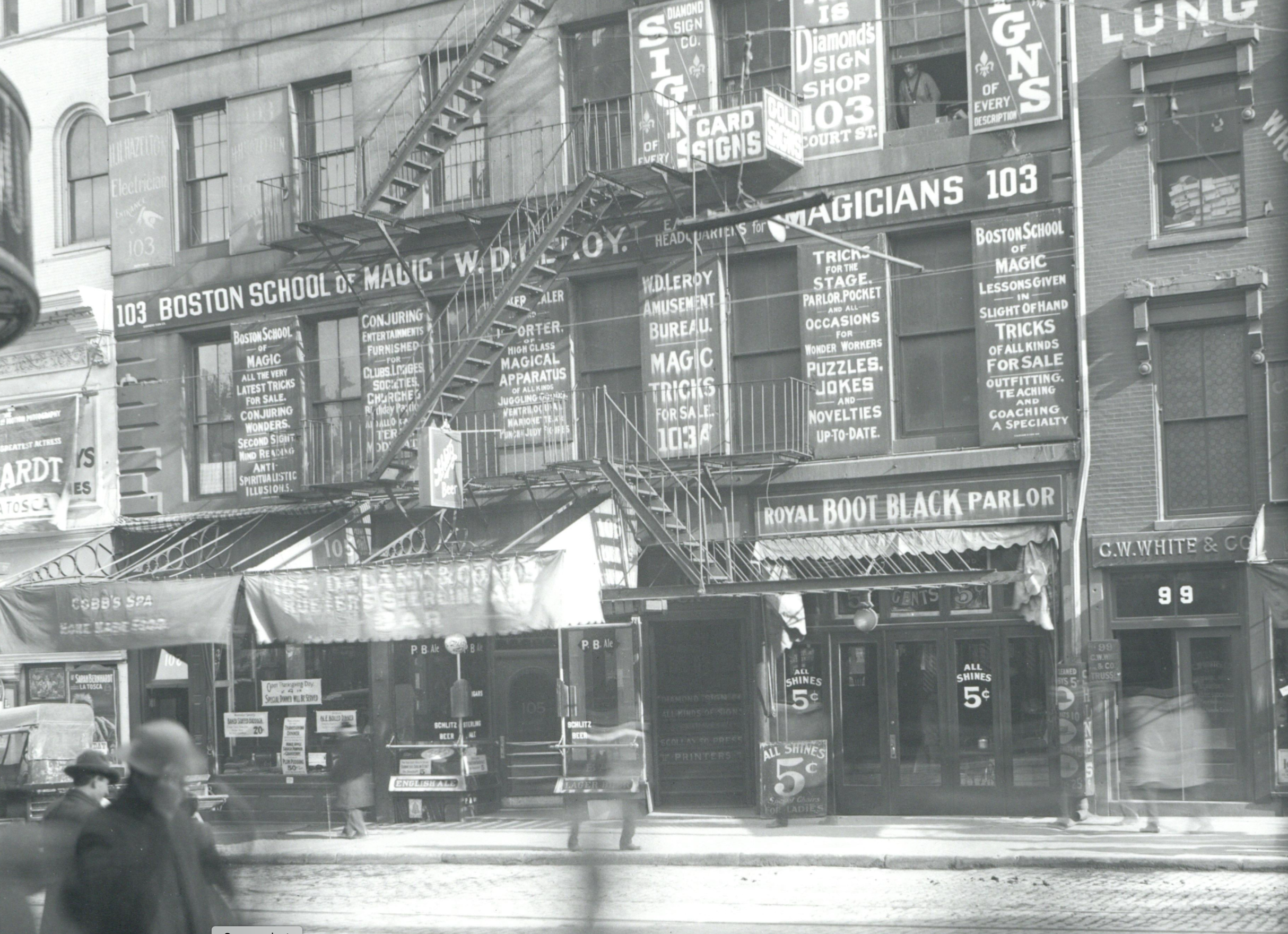
It is rooted in Boston’s actual history — in a chapter of this city’s past that most people have never encountered but that, once they find it, feels like something they’ve always sensed was there.
It is designed so that no two visits are the same — not as a marketing claim, but as a structural reality built into every layer of how the experience works.
It creates employment — real, sustained, year-round employment for Boston’s extraordinary creative workforce — not as a side effect but as a core purpose.
And it is designed to be here in ten years.
Not as a hope. As a design intention.
What Comes Next
This series has now made five arguments.
That Boston’s creative ecosystem has a structural gap that talent and audience alone cannot fill.
That the commercial proof of concept — the evidence that Boston can sustain exactly this kind of venture — already exists and always has.
That the model — immersive, experience-driven, commercially structured — is not theoretical but documented and growing.
That Boston’s own history — specifically, a chapter most people have forgotten — provides exactly the kind of deep, specific, irreplaceable foundation that permanent entertainment destinations are built on.
And now: that sustainability is not a result of success but a precondition for it — designed in from the beginning, built into every structural decision, and pursued as deliberately as the creative vision itself.
The next article brings all of that together.
It introduces — by name, in full, for the first time — what I’ve been building.
I’ve been reluctant to name it before now. Not out of caution — but because I wanted the argument to precede the reveal. I wanted you to understand the ‘why’ before I showed you the ‘what.’
Now you do.
And there’s one more thing I’ll say before the next article.
What I’m building is rooted in a history that has been hiding in this city for over a hundred years.
LeRoy built something. Houdini passed through it. Crandon left her question inside it.
And it has been waiting, quietly, for someone to open the door.
— Jonathan